Everything You Need to Know About the PDT Rule (Pattern Day Trader Rule)
Understanding the Pattern Day Trader (PDT) rule is crucial for traders, especially if you want to avoid getting flagged or restricted by your broker. In this article, we’ll cover the essential points about the PDT rule, including how it affects your account and ways to legally trade without the $25,000 minimum.
–> Watch the video at the end for tips on how to avoid the PDT rule.
What is the PDT Rule?
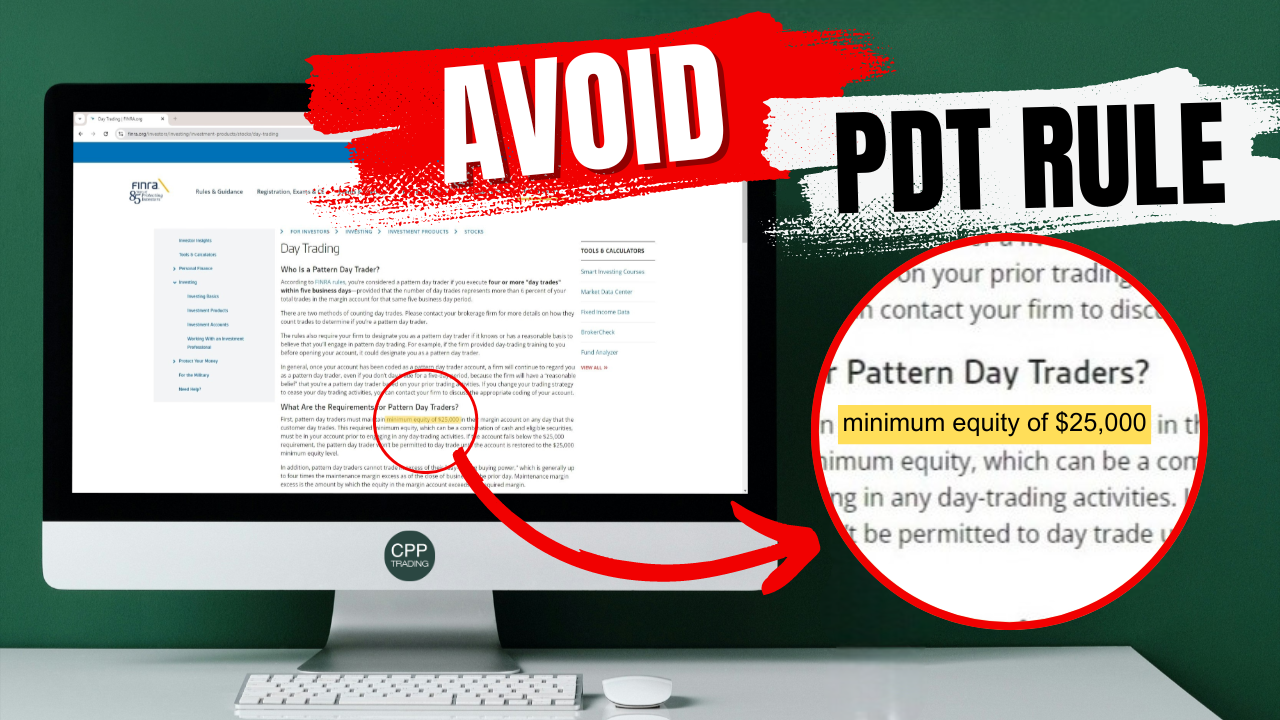
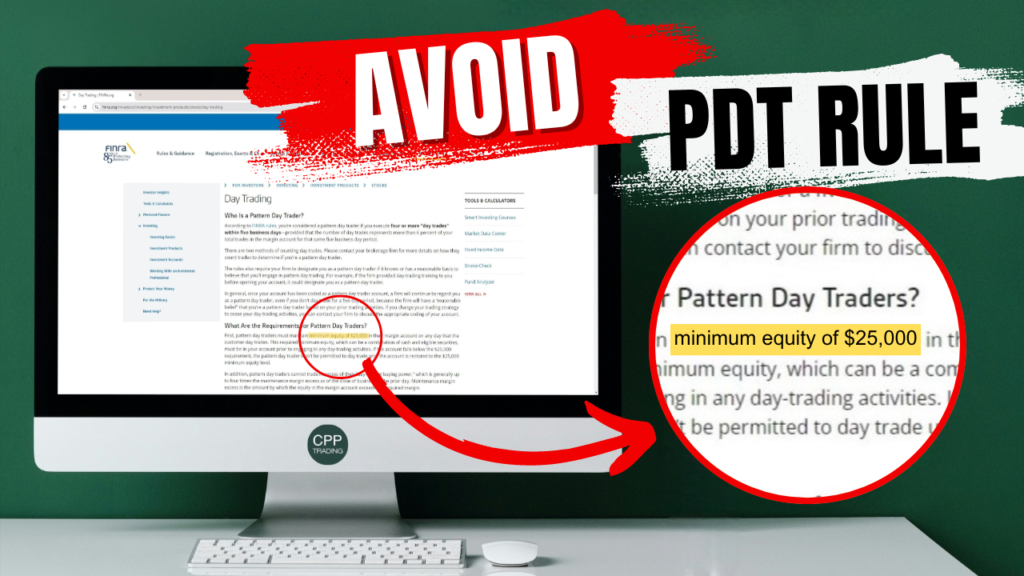
The PDT (Pattern Day Trader) rule, set by FINRA, requires any trader who executes more than three day trades within a rolling five-business-day period to maintain at least $25,000 in their margin account. If your account falls below this amount, your broker may flag your account and restrict your ability to day trade.
Key Points:
- Rolling 5-Day Period: This is not based on a regular Monday-Friday week. The rule applies to any consecutive five business days.
- Example: If you make three day trades on Monday and no more that week, you’re fine. But if you make trades on Wednesday, Thursday, Friday, and again the following Monday, you’ll violate the rule and get flagged.
Most brokers offer a one-time reset if you’re flagged for the first time, but repeat violations mean your account can be flagged permanently until you meet the $25,000 minimum.